


Leg Pain When Walking: Causes to Know

Leg pain when walking is common, and the pattern often matters more than the pain score. A calf that cramps at the same distance and eases when you stop is a different story from a sharp pain that shoots from the low back into one leg. Muscle strain, joint irritation, a pinched nerve, and reduced blood flow can all show up on a walk. Only a proper exam can sort them out.
This guide stays diagnostic-neutral. It explains patterns people notice, symptoms that deserve prompt medical care, and what an evaluation looks like before anyone talks about a care plan. It is not a diagnosis, and it is not a reason to skip a medical visit when the signs are serious.
Why the pattern of leg pain when walking matters
People often describe the pain first and the pattern second. The pattern is the more useful clue. Ask yourself four questions the next time it happens.
Where does it start, and where does it travel?
Does it begin after a set distance or a set amount of time?
What makes it ease: sitting, leaning forward, standing still, or stopping the walk?
Is it one leg or both, and is there numbness, weakness, or a color change?
A sore muscle after a longer walk than usual often eases over a day or two. Pain that returns at the same mailbox, the same block, or the same minute on the treadmill is worth a closer look. So is pain that arrives with tingling, a heavy feeling, or a leg that looks pale, cool, or blue.
Age, diabetes, smoking history, and prior back or leg injuries change the odds, but they do not name the cause. Two neighbors can have the same calf cramp for different reasons. One may be dealing with a tight calf after yard work. The other may have narrowed arteries that cannot deliver enough blood once the muscle starts working. Guessing between those stories is how people wait too long.
Writing the pattern down helps the visit. Note the distance, which leg, what the pain feels like, and what you did to ease it. A few walks of notes beat a vague memory that the pain just happens sometimes.
Muscle and Joint Reasons a Walk Can Hurt
The simplest explanation is often a working muscle that was asked to do more than it was ready for. A calf, hamstring, or shin can ache after a new route, a faster pace, worn shoes, or a week of standing more than usual. That ache tends to show up in the muscle you used, stay in one area, and ease as the tissue settles.
Joints can complain on a walk too. An irritated knee, hip, or ankle may feel stiff at the start, loosen a little, then ache again as the distance adds up. Stairs, hills, and uneven sidewalks make it more obvious. Swelling at the joint, a catch, or pain that is sharp with one specific motion points more toward the joint than toward a nerve or an artery.
What a muscle pattern often looks like
Muscle pain is usually local. You can point to it. It may feel tight, sore, or crampy, and stretching or a short rest can take the edge off. It should not come with a cold, pale foot or sudden weakness. If the same cramp returns at a predictable distance, do not assume it is only the muscle. Rest that clears it is also how reduced blood flow announces itself.
Shin discomfort along the front or inside of the lower leg is another walking complaint, especially after a jump in mileage. Shoes, surface, and pace matter. Persistent shin pain, swelling, or pain at night still belongs in a medical exam, because a stress injury can hide inside what feels like ordinary soreness.
When a nerve may be involved
Nerve-related leg pain often travels. It may start in the low back, buttock, or hip and run down the thigh, calf, or foot. People describe it as sharp, burning, electric, or like a line of pain. Tingling, numbness, or a feeling that the leg is not quite listening can ride along with it.
One well-known pattern is sciatica. The sciatic nerve is the long nerve that runs from the low back through the buttock and down the leg. Irritation along that path can make walking, sitting, or bending feel worse. Coughing or sneezing sometimes jolts the pain. A full look at why sciatica starts is a separate topic. If that is the main question, the wellness blog is where Evolve covers related spine and nerve topics as new posts go live. This page stays on the walking pattern, not the whole sciatica story.
Spinal stenosis is another nerve pattern that shows up on walks. The space inside the spine can narrow with age-related change, including arthritis, thickened ligaments, or a disc that takes up room. MedlinePlus describes spinal stenosis as narrowing that can cause cramping or pain in the legs. Symptoms often worsen with standing or walking and improve when you sit or lean forward. Some people feel better pushing a shopping cart because that slight forward lean opens space for the nerves. Back pain can be part of it, but it is not required.
Neuropathy is different again. Irritated or damaged nerves can cause burning, tingling, numbness, or weakness, often in both feet, and the feeling may be there at rest as well as on a walk. Diabetes and reduced circulation are among the reasons this happens. Not every numb foot is neuropathy, and not every walking cramp is a pinched nerve. The distinction is why an exam comes before a label. Evolve's neuropathy care in St. Augustine is one place people go after that evaluation, when nerve symptoms are the main concern.
When blood flow is the limiting factor
Muscles need more blood the moment you start walking. If an artery in the leg is narrowed, the muscle can outrun its supply. The result is called claudication. It is a symptom, not a disease name. The National Heart, Lung, and Blood Institute describes claudication as leg pain, aching, heaviness, or cramping with walking that improves with rest. It is a common sign of peripheral artery disease. The classic story is cramping or aching in the calf, thigh, or buttock that starts at a repeatable distance and eases within a few minutes of rest.
That rest clue is useful. With many circulation problems, you do not have to sit or lean forward. Stopping is enough, and then you can walk again until the same distance brings the pain back. Nerve pain from stenosis often wants the posture change, not just the pause. The two can also overlap in the same person, which is another reason self-sorting falls short.
Reduced flow can bring other signs. The skin may feel cool. Color can change. Sores on the foot or lower leg may be slow to heal. Numbness can appear. Pain that used to happen only on hills may start to happen on flat ground, and later even at rest. Those shifts are a reason to call a medical clinician, not a reason to push through more walks and hope the artery catches up.
A sudden cold, pale, or blue leg, or pain that hits hard and does not ease, is an emergency pattern. So is a leg that becomes swollen, warm, and tender, which can be a sign of a clot. Those are not "walk it off" problems. Use emergency care or urgent medical care the same day.
A simple way to compare the common patterns
Use this table as a conversation starter with a clinician, not as a home diagnosis. Real visits find mixes, and some serious problems start quietly.
Pattern people notice | Where it tends to sit | What often eases it | Why it still needs a look |
Local muscle or joint ache after a new or longer walk. | One muscle or one joint you can point to. | A day or two of relative rest, an easier pace, or better shoes. | A stress injury or joint problem can mimic ordinary soreness. |
Cramp or heaviness at the same distance. | Calf, thigh, or buttock, in one leg or both. | Standing still for a few minutes, then walking again. | This is the classic circulation clue and needs a medical check. |
Pain with standing or walking that likes a forward lean. | Low back, buttock, and one or both legs. | Sitting or bending forward, such as leaning on a cart. | Narrowing in the spine can press on nerves and may worsen. |
Sharp, burning, or electric pain down one leg. | It runs from the back or buttock into the thigh, calf, or foot. | It varies. Some positions help and others provoke it. | A nerve may be irritated. Weakness or bladder changes escalate care. |
Burning, tingling, or numbness in the feet. | Often both feet, and sometimes the hands too. | Not always tied to the walk. It may persist at rest. | Nerve irritation has many causes, including blood sugar and circulation. |
If your notes match more than one row, that is normal. Bring the notes anyway. The point of the table is to help you describe the pattern clearly, so the exam starts in the right place.
Symptoms that should not wait
Most walking pain is not an emergency. Some of it is. Get same-day medical care, or emergency care if the symptom is severe, when you notice any of the following.
A leg that is suddenly cold, pale, blue, or numb, with or without severe pain.
Pain, swelling, warmth, and redness in one calf or thigh.
New weakness, a foot that drops, or trouble bearing weight.
Loss of bladder or bowel control, numbness in the saddle area, or rapidly worsening weakness.
Chest pain, shortness of breath, fainting, or pain that spreads beyond the leg during the walk.
A sore on the foot or leg that is not healing, especially if you have diabetes.
Walking pain that has moved from "only on hills" to "at rest," or pain that wakes you and will not settle.
Call your medical clinician promptly when the pain is new after an injury. Do the same if it keeps you from your usual short walks, or if it arrives with fever. Do not wait overnight on those signs. Do not wait for a chiropractic visit to rule out a circulation problem, a clot, a fracture, or an infection. Those need medical evaluation first.
If the pain is familiar, one-sided or both, and you can still walk with adjustments, you can usually schedule an evaluation rather than head to the emergency department. "Usually" is not a promise. When you are unsure, urgent medical care is the safer call. A clinic that finds nothing serious has still done you a favor.
What an evaluation looks at first
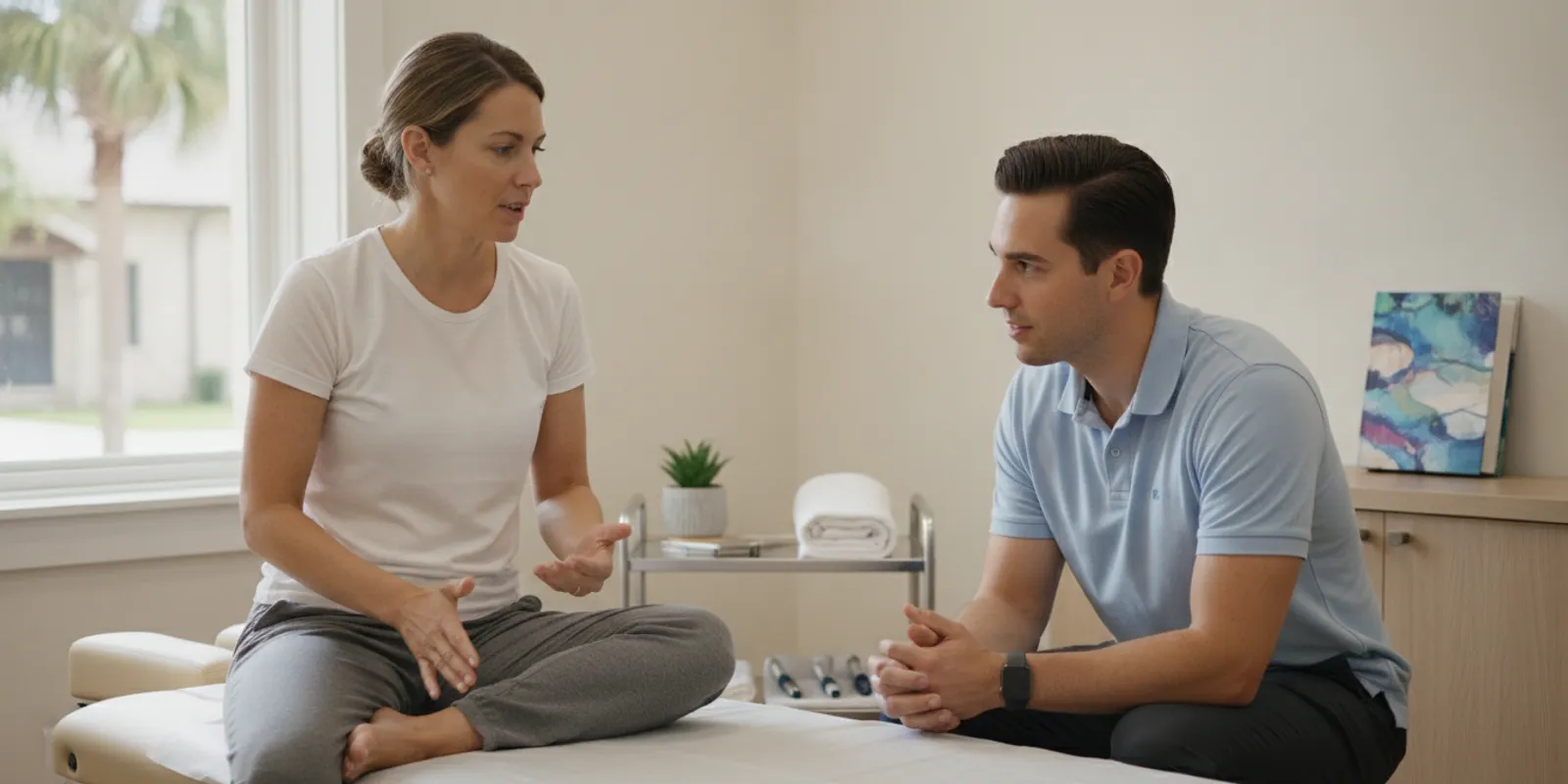
A useful first visit starts with the story, not a sales pitch. Expect questions about where the pain lives, how far you can walk, what rest does, and whether you have numbness, weakness, swelling, or skin changes. A clinician should also ask about back pain, diabetes, smoking, prior leg or spine problems, and medicines.
The exam may include pulses in the feet, skin temperature and color, joint motion, muscle strength, reflexes, and a look at how you stand and walk. Depending on the pattern, medical testing can include a blood-flow study, imaging, or lab work. None of that is automatic, and none of it should be skipped just because someone would rather start with hands-on care.
At Evolve Chiropractic & Wellness Co. in St. Augustine, the published first visit is built as an evaluation. The team reviews your history and goals, examines the spine and how you move, and takes necessary spinal X-rays when they are appropriate. Dr. James Haley, the founder, currently sees new patients on day one. A later visit is used to explain findings and talk through options. Care is in person at one office, 35 Summerlin Lane, Ste. 107, St. Augustine, FL 32095. People also come from Ponte Vedra, Nocatee, and Palencia. Those are communities the clinic serves, not extra offices.
Chiropractic care at Evolve looks at structural movement and nerve irritation related to the spine. It also looks at the broader picture of how you are recovering. Disc therapy is part of the practice when an exam points toward disc-related irritation.
That care is not a promise that a disc will move back into place. It is not a substitute for medical care when blood flow, a clot, or a medical disease is the real question. If walking pain looks circulatory or systemic, the next step is a medical clinician. If the exam points toward the spine, joints, or movement, a chiropractic plan may be one option to discuss afterward.
The practice is a cash-only clinic, and plans are personalized after the findings are clear. This article does not quote a price, because the right plan depends on what the exam shows. The public phone is (904) 712-3667.
How to prepare for that conversation
A short log makes the visit faster and more accurate. You do not need an app. A note on your phone is enough. For three walks, write down:
The route and about how far you got before the pain started.
Which leg, and whether the pain stayed put or traveled.
The feeling: ache, cramp, burn, sharp line, numbness, or heaviness.
What you did next, and how long until it eased.
Any back pain, foot color change, swelling, or weakness the same day.
Also list shoes you walk in, recent changes in distance, and health conditions you already know about. Bring that page. It keeps the story from shrinking into "my legs hurt.
While you wait for the visit, match your walks to what you can do without a big flare. Shorter, easier walks are reasonable for ordinary muscle soreness if a medical clinician has not told you to stop. They are not a treatment for a cold, pale leg or for pain at rest. Skip new intense hills until someone has looked at the pattern. Supportive shoes and a flat route are low-risk adjustments, not a cure.
Heat, ice, and over-the-counter comfort measures are individual medical decisions. This article does not recommend a medicine or a dose. If you already take blood thinners, have diabetes, or have been told to limit activity, follow that medical advice.
What this is not
Walking pain is not proof that you need an adjustment, a decompression series, or surgery. It is also not proof that you should ignore it. A preference for non-surgical care is reasonable to talk about after the cause is clearer. It is not an outcome, and it should not delay a medical exam when red-flag symptoms are present.
Evolve does not claim to be the only clinic with non-surgical options. This page does not promise that pain will stop, that a disc will retract, or that a root cause is fixed. Many people with spinal stenosis have no symptoms at all. Many people with sore muscles never need imaging. The honest path is an exam that fits the pattern you actually have.
If your main issue is foot or heel pain with the first steps in the morning, that is a different complaint from calf or thigh pain on a walk. Evolve has a separate page on plantar fasciitis care for that foot-first pattern. Knee pain that stays in the joint is covered on the knee pain page. Disc-related symptoms that start in the spine are described on the disc therapy page. Use those when they match. Stay here when the question is why the pain shows up while you walk and when to get help.
Call (904) 712-3667 to schedule your visit for an in-person evaluation at the St. Augustine office after urgent medical problems are ruled out.
Frequently asked questions
Why do my legs hurt only after I have been walking a few minutes?
A repeatable distance is a clue. Muscles that are simply undertrained usually ache in a broader, less clock-like way. Pain that starts at the same block and eases when you stop can be a circulation symptom called claudication. Pain that eases when you sit or lean forward can be a nerve pattern, including spinal stenosis. Both deserve a medical look rather than a guess.
Is leg pain when walking always a sign of poor circulation?
No. Muscle strain, joint irritation, and nerve irritation are common too. Circulation becomes more likely when the cramp is predictable, rest while standing clears it, and the skin is cool, pale, or slow to heal. A clinician can check pulses and, when needed, order a blood-flow study. Do not decide this from a symptom list alone.
Can a back problem cause pain that I only notice while walking?
Yes. Narrowing in the low back can bother nerves more when you stand tall and walk, then ease when you sit or bend forward. A disc or joint problem can also refer pain into the buttock or leg. Walking is the trigger people notice, even when the source is higher up. An exam should include the spine, not only the calf.
Should I keep walking through the pain?
For ordinary muscle soreness, easier and shorter walks are often reasonable until you are seen. Do not push through a cold or pale leg, sudden swelling, new weakness, chest symptoms, or pain that is severe and new. If a medical clinician has already cleared you and suggested a walking program, follow that plan. If no one has examined the pattern, pain is information, not a target to beat.
When should I go to the emergency room instead of scheduling a visit?
Go now for a suddenly cold, pale, or blue leg, or for severe pain that does not ease. Do the same for a swollen warm calf, new bladder or bowel trouble, rapidly worsening weakness, chest pain, or trouble breathing. Schedule an evaluation for a repeating walking pattern without those signs. If you are unsure which group you are in, urgent medical care is the right default.




Comments